
I wandered into a chapel the other day … and found myself wondering about the nature of the Holy One.
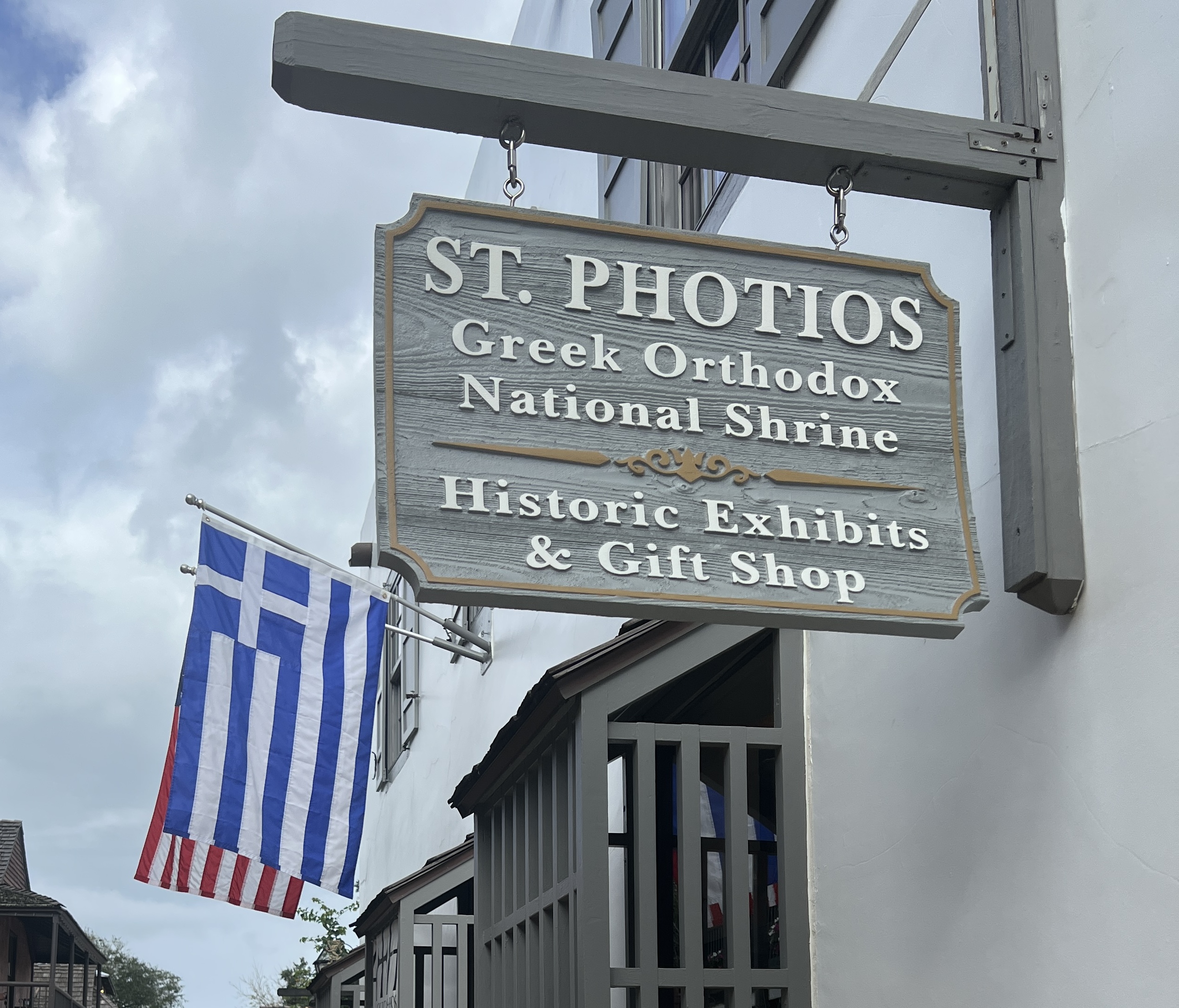
My Sweetie and I were in St. Augustine, Florida, for a long weekend – there to help celebrate a niece’s nuptials. And in the downtime between wedding events, we took a stroll through the city’s historic district – there encountering an unexpected attraction: St. Photios Greek Orthodox National Shrine.
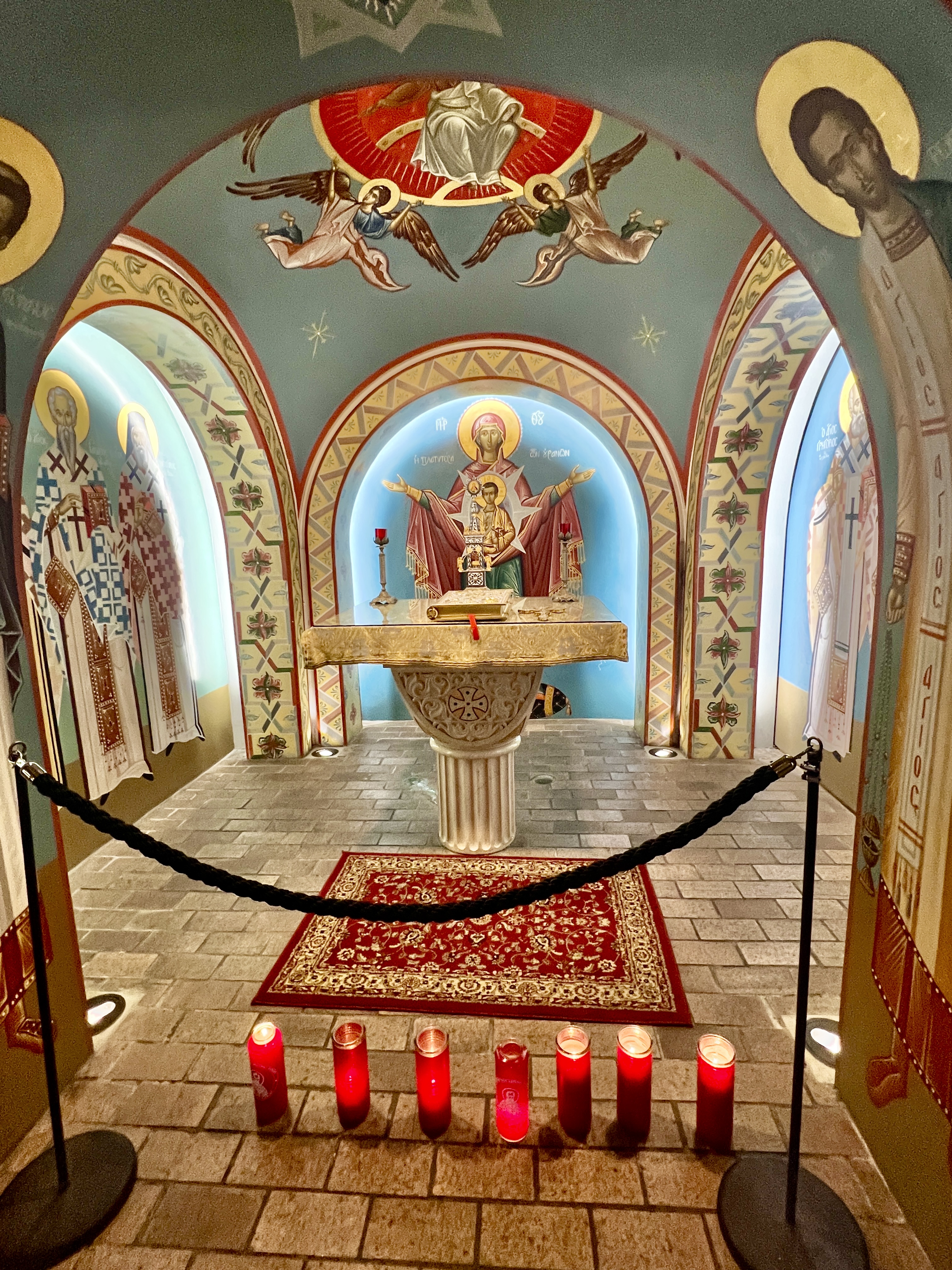
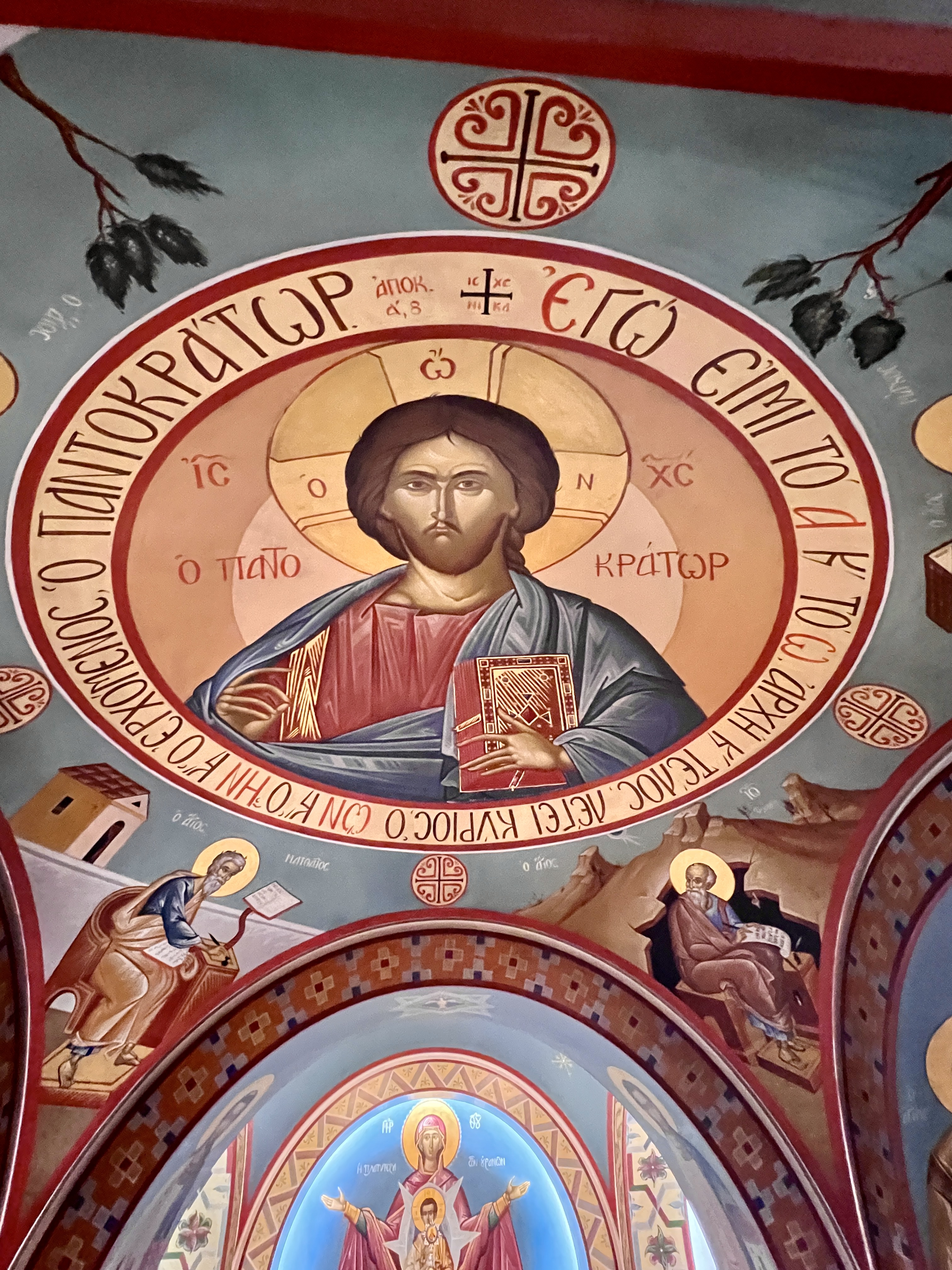
Inside, the liturgical music (playing softly on loudspeakers overhead) was lovely, even mystical. Stunning iconography drew us in, too … walls and ceilings covered in colorful images that made my spirit soar, particularly in the chapel dedicated to St. Photios – a guy I’d never heard of before.
There were also informative exhibits in the place, recounting how Greeks first came to this city most famous for being a Spanish settlement, long before the United States became a country. It’s not a particularly uplifting story – centered more on exploitation than discovery or adventure. But you got the sense that their orthodox faith helped sustain the earliest Greek immigrants to North America.
The thing that intrigued me most about the shrine, though, was the full-wall display … decorating one room with the words of the Nicene-Constantinople Creed, in English and Greek. My Sweetie and I thought the words sounded familiar, very familiar indeed. With a quick read, we didn’t even notice the difference between it … and the Nicene Creed we recite at Mass each Sunday.
The difference (in Latin) comes down to a single word: filioque. It’s there in “our” creed, but not there in the Constantinopolitan version. This word finishes off an assertion that western Christian traditions make about the nature of God – that the Holy Spirit “proceeds from the Father and the Son (filioque).” Orthodox traditions, I later learned, say the Holy Spirit proceeds from the Father alone.
Remarkably, this theological disagreement sparked the Great Schism of 1054. There were other dynamics at work, to be sure – politics and power games and pride and patriarchy. And I’m sure both sides have had very good reasons for digging in their heels over “filioque” in the 972 years since the split. Still, I wonder: Wouldn’t it be better for Christians – all Christians, East and West – to just sit with the mystery of Who God is? To humbly admit we don’t know as much as we think we know about the nature of the Holy One?
And as we linger in this mystery, let’s also remember to pray for each other – especially All Souls who have already met God face-to-face.
Let us pause now…to recall that we are in the presence of the Holy & Merciful One.
IHS


