
So, if somebody said, “Bring me a No. 3 pencil, please…” would you be able to comply?
I could, now. But as recently as a couple of days ago, I probably would have wondered aloud whether there’s even such a thing as a No. 3 pencil. I’m old enough to be well familiar with the No. 2 version, the ubiquitous writing instrument of my youth. I even vaguely recall the angst I felt as a third-grader, preparing to take my first standardized test – the instructions for which insisted on marking the answer sheet only with a No. 2 pencil.
No need to worry, really. No. 2 pencils were everywhere then, favored for making marks that balanced darkness with smudge resistance. They were (and are) the pencils of everyday use – at least for folks who still use pencils.
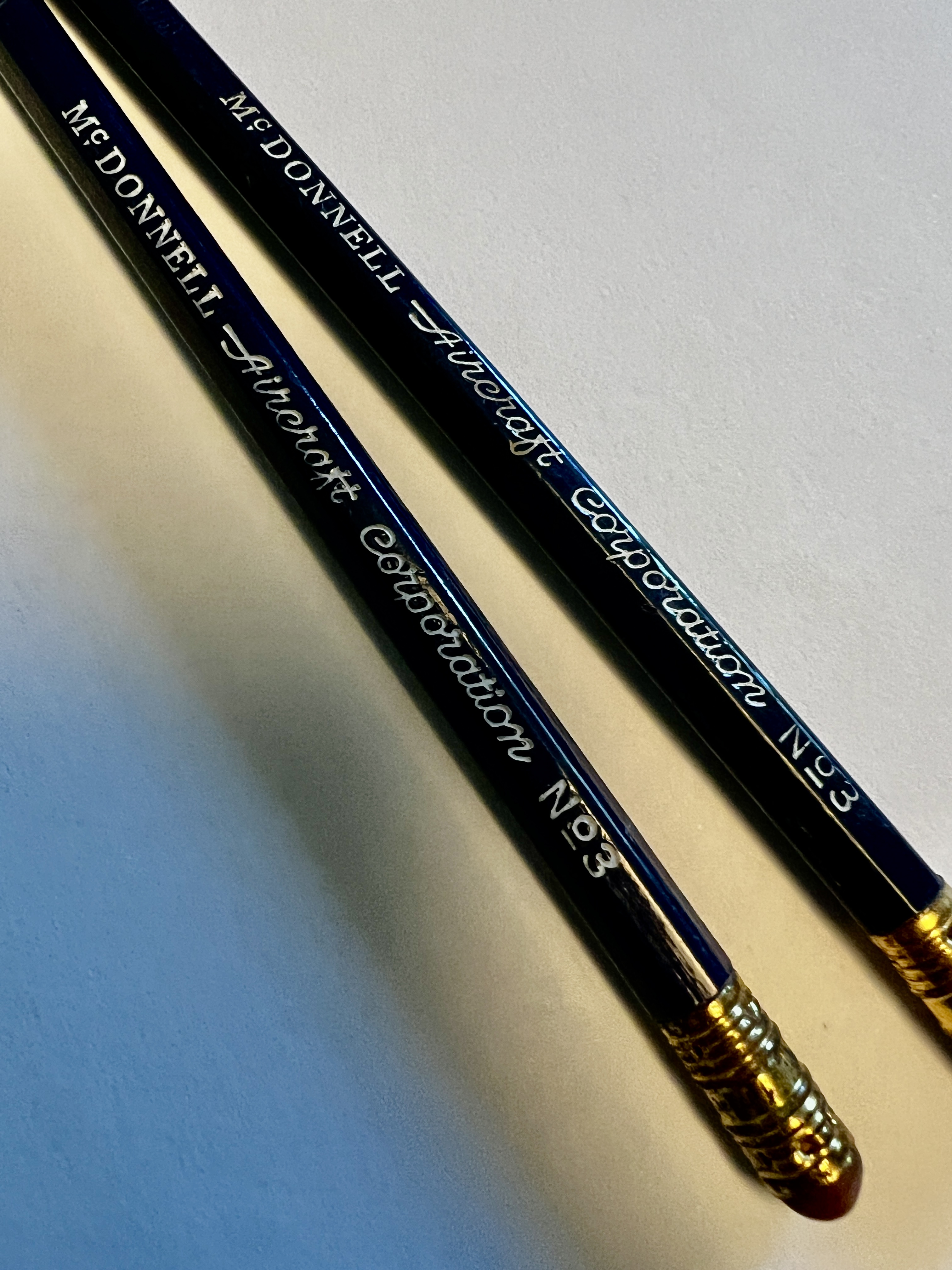
The No. 3, I learned this week, is a more specialized version – its graphite core producing the fine light lines required for technical drawing. The perfect tool for a draftsman like the young professional who’d one day become my father-in-law. And that helps to explain how I came across a couple of No. 3s the other day, buried deep in a desk drawer in our home. (In case you’re wondering, these pencils have to be at least 65 years old, judging by the logo they bear.)
Almost nobody uses a No. 3 today, of course. Technical drawing is done using digital tools. But it intrigued me to consider how these two pencils still could be used to elicit a story or two – tales that would inevitably span many decades. Stories, alas, that would be of interest only to a few family members and friends.
How very different, then, is the story we hear in this week’s gospel passage: The Good Samaritan. It’s been a prominent part of our collective consciousness for well over two thousand years. Indeed, it pretty much defines – with a fine tight line, as it were – what it means to be Christian. “Go and do likewise,” Jesus says.
That’s the ubiquitous message, the No. 2 version of the story. But I was moved to reflect on another aspect of the tale today, focusing not on the main players … but on the man who “fell victim to robbers as he went down from Jerusalem to Jericho.” Trying to see the story from his perspective, it occurred to me how the passage of time might have transformed the whole experience. The worst day of his life … turned into a much better week, thanks to the compassion of the Samaritan … and eventually (perhaps many decades on) a source of profound gratitude, for the healing and mercy made manifest in his life that day.
We often find God working in just such a way, do we not? “God writes straight with crooked lines,” as they say. And in the second reading, St. Paul reminds us how best to see the fine lines of God’s presence in our lives:
Christ Jesus is the image of the invisible God,
the firstborn of all creation…
He is before all things,
and in him all things hold together.
“All things,” St. Paul says.
It all belongs – good and bad, joys and sadness, every jot and tittle written through the decades on the crumpled pages our lives. It all belongs, and it is Christ Jesus who redeems it all. And so we pray for an outpouring of this grace today: “Lord, give us eyes to see.”

Let us pause now…to recall that we are in the presence of the Holy & Merciful One.
IHS


 With Us Still